Friday, July 27, 2012

Unhas - fingernails - Beau Bledsoe


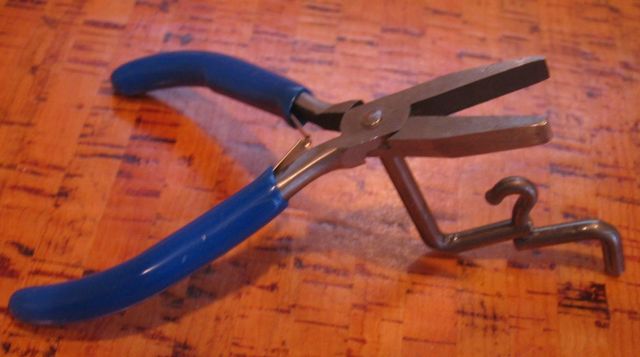
I've attempted to make my own finger picks for playing the Portuguese guitar. This is a traditional practice that most of the guitarists utilize in Portugal. I have my own nails that I use to play so I think I may by pass on this practice altogether. Plus my hero Carlo Paredes seems to get along just fine without these artificial nails. But my family is out of town and I recently built a new work bench in the basement. Let us begin. Using the youtube video here and here I managed to initiate myself into yet another bizarre practice of the Portuguese guitar.


materials needed: CD case, slide, dremel tool, drill, scissors, surgical tape, exacto blade,  2X4, ruler, safety glasses, beer


drill hole


insert slide, note: failed other hole (too small)


assemble "mold"


cut acrylic piece out of CD case


drill hole for finger


heat brass slide and attempt to mold acrylic into a curve. Fail miserably


Try cutting a shape out of a pill bottle


success!

They go on the fingers like so.

Again...I think I may have to not use these. We'll see.


Renaissance madman - Beau Bledsoe

On July 16th, we all loaded up into a couple of cars and headed out to the home of Dave Bucher in Raytown, Missouri. There we received the grand tour of his home, libraries and guitar shop. Giuliano Mingucci helped us document the event. I edited down the half day into this 20 minute video of Dave explaining his construction methods, what inspires him and many historical lesson regarding musical instruments and art.

Personally I was struck by his "three elements" statement of instrument construction at the end of the video. In order; aesthetic, playability and then sound. For a musician, sound is usually the first thing - naturally. I once owned a really great sounding Conde Hermanos flamenco guitar that looked like a twelve year old had built it. But it had "the sound" that made their Madrid workshop so very famous. On the other hand, when I moved to Kansas City I apprenticed at a violin shop and learned much about violin construction. One day, The owner of the shop told me that Stradavarious was nothing more than a fine, methodical builder that used good materials. He also claimed that all we could aspire to do was to copy Michelangelo's David over and over again. The violin being a perfect form like David. Antonio Stradavarious and his Cremona contemporaries had perfected the violin design. Nothing more to add.

The sound of Dave's Portuguese guitar still remains unknown.  It sits in his workshop now, finish drying. It will be ready for strings in about two weeks. I hope his "three elements" ring true in the sound of the instrument. He certainly has aesthetics nailed down.

- Beau


Sunday, July 15, 2012

What is this strange thing called a Portuguese guitar? - Beau Bledsoe


Today I received this in my inbox…"I keep checking back for updates!!!! What's happening? How about posting links to some samples on You Tube or something? What the heck IS a Portuguese guitar anyway? Inquiring musical minds would like updates. Thanks,"

Oh how flattered I am that someone is interested! Well reader, No new samples yet but I’d love to answer the guitar question.

The Portuguese guitar is an unusual instrument that bares little resemblance to the Spanish guitar that I play everyday. In fact that instrument is called the “viola” in Portugal. Confused yet?


Although there is much debate, most agree that it’s a direct descendant of the English guitar from the 1700’s, which is really a cittern. The cittern is a pear shaped string instrument that was very popular all over Europe dating from the Renaissance. For hundreds of years it was the premier instrument of casual music making much as is the guitar today.

English guitar
woman with cittern


It’s playing technique can be dated back to the 17th century. The instrument employs a very old right hand technique called “dedilho” or “dedillo in Spanish”. The fingers of the plucking hand are almost parallel to the strings and only the thumb and forefinger are used with few exceptions. The pinky finger rests on the soundboard which will surely give all of my former classical guitar teachers massive heart attacks. Observe the hand position in the oil painting below compared to the record cover of Portuguese guitar legend Carlos Paredes. Also many lutenists utilize a similar technique. In the Portuguese style, the right corner of the nail is used to pluck the string but many modern players have moved to using artificial nails made from tortoise shell or plastic. 


Another esoteric feature is that I have to make my own strings! I feel like those monastic oboe players that spend many hours diligently making their own reeds. Actually it’s not so bad. I have to buy the wire strings in spools and make my own loops at each end of the string using my new "alicate" (string winder). I understand that this is what many guitarists had to do in ye olden days.


I also have to get around to making my own “unhas” or artificial nails to play the guitar with. Thanks to the unusually thorough youtube videos of Ron Fernandez I think I’m going to be able to do this project with my dremel tool, some empty pill bottles and surgical tape. It all just gets more and more strange.


Oh…and for musicians only – Look at how this thing is tuned! Lord help me.


One aesthetic detail of the Portuguese guitar that I'm absolutely enamored with are the "Preston tuners" that grace the head of the instrument like a proud peacock. This design was invented by London guitar maker, John Preston (1753 - 1700). These are also know as "watch key" tuners.


My Portuguese guitar, made by my friend Dave Bucher, is supposed to be completed in mid August so I’ll let you know how things progress. I really hope this helps everyone grasp this strange and beautiful instrument because I'm still thoroughly mystified.

- Beau


Wednesday, June 27, 2012

Finalidade - Shay Estes

The Artist Inc II application is finally finished, away, and out of my hands.  This is always a beautiful, if slightly nerve-wracking feeling, although it makes little difference; the project has already taken on a life of its own.  I am confident that the acceptance or refusal of one grant will not delay or halt our progress.  The three of us are far too obsessed with Fado at this point, and we must make this music.  If you're interested in a "why," here is mine: 
     
My obsession with the Portuguese language grew out a love of Brazilian music and all other things brasileiro. As part of my artistic method requires cultural understanding, I have been visiting and studying Brazil for the last three years, learning not just its music, but its history and culture. Inevitably, my interest in Brazil lead me to Portugal. To deepen my understanding of the language and people of the Brazil, a country that for me has become nearly a second home, I felt I must understand the relationship and effect that Portugal had on its colonies and particularly the backwash of music and culture that Portugal's colonies had on it. One amazing result of that relationship is Fado (which means "fate,") and exploring it felt like the natural next step.

As a musician, I find I often need new projects to provide a fresh perspective on my art and to challenge my instrument in new ways. I have found in Fado a style of music that suits itself uniquely to my voice, particularly my range, timbre, and vibrato, allowing me to develop and emphasize certain vocal characteristics that other genres do not. The dramatic nature of the music and emotionally-charged performance style of the fadista  utilizes my background in theater in a more prominent way than many of my other projects allow.

Additionally, Beau and I have been looking for a project to work on together for years, as have he and Jordan. The common realization of our individual budding obsessions with Fado, and a couple of conveniently-timed deadlines, (AI II and an all-Fado wedding full of honest-to goodness Portuguese – all in the same week) told us that the stars had aligned on this project; it was to be – quite literally – our fate.

Beijos,

Shay

Sunday, June 24, 2012

Fado Novato - Jordan Shipley


My recent re-discovery of this passionate and melancholy music from Portugal when approached to prepare an authentic Fado performance for an upcoming Portuguese wedding in the Midwestern U.S. city of Kansas City, Missouri was a welcome surprise. I was introduced to Fado slowly during the last 5 to 6 years at various points during my study of the Portuguese language and the music of Brazil. I have intensely studied the music of Brazil for several years including a nearly two month stay in Brazil spread between São Paulo and Rio de Janiero. Spurred by my love of the music of Brazil I began study of the Portuguese language in 2008 to prepare for my stay in Brazil. Fado was first introduced to me by my language teachers and Portuguese speaking friends and I was immediately enchanted by the emotion and raw power expressed by often only voice, guitarra (Portuguese guitar) and viola (nylon-string guitar). The music of Brazil draws direct influence from Portuguese musical traditions and traditions that people brought to Brazil from Africa during colonization and slavery in Brazil and other Portuguese colonies; which has in turn inspired the traditions of Fado music in Portugal. I am excited and overwhelmed by the task of learning the history behind this immensely expressive music and the people and culture which created Fado.


I have always had a love for the study of other cultures, music, and foreign languages which all come together with the study of Fado; a musical culture somewhat unknown within the United States. I have a background and love for playing the traditional music of Brazil, Argentina, Mexico and a solid background in Jazz and Blues music from the United States and other styles of music unique to the cultures that created them and strongly influence by the colonization of the Americas. 
I have thoroughly enjoyed the challenging process of transcribing and arranging the music that I have been commissioned to produce and that will help spark the beginning of Fado Novato. Even with the somewhat simple structure of the music, and specifically the pieces I have been working with, the re-harmonization during each section of the songs, and subtly of each part, made the process fascinating and quite challenging. The bass lines and ever changing accompaniment provided by the nylon string guitar, and flourishing Fado guitar phrases, seem to propel the music forward and provide support for the captivating melodies. The swing and identifying feel of the music is quite familiar to me; which I believe might be because of the shared influences between Fado and the traditional urban music of Brazil created in the last two centuries. 
I share with Beau a strong love for the study of other plucked string instruments and I am looking forward to learning the Fado guitar and commissioning one of my own in the future. So far I have been making due by playing the Portuguese guitar parts on either mandolin, acoustic guitar, or a Brazilian steel-stringed version of the ukulele called cavaquinho.

– Jordan Shipley

Thursday, June 21, 2012

The Portuguese guitar - Beau Bledsoe


Putting together a new Fado music project from almost nothing is a very exciting and daunting task and to publicly share the process on the internet even more frightening. I've long been very attracted to Fado in a sort of femme fatale way for many years. I often thought to myself "you really should stay away from that Fado girl...what a disaster she is." It's stylistic connections to Argentine tango and Andalusian flamenco make Fado feel familiar to me. It's simplicity of form and long standing conservative tendencies are also very attractive. I also believe Fado to be the saddest music I've ever heard so what's not to like?

My dear friend Christine Brebes turned me on to guitarist Carlos Paredes in the '90s and of course the fado/pop group Madredeus was huge then. I also loved the Wim Wenders movie "Lisbon Story" featuring Madredeus. I've recently commissioned a Portuguese guitar to be made by local Kansas City luthier David Bucher. He specializes in building bouzoukis and citterns which are very close relatives to the Portuguese guitar. I have never played one in my life but I suspect I will really enjoy it. I'm currently collecting the extremely sparse material available for this esoteric guitar style. I managed to find Portuguese Guitar: Fados and Counter-Melodies Book 1 by Eurico Cebolo from this fine website by Portuguese guitarist, Ron Fernandez.


The Portuguese guitar is tuned very strangely in no way similar to the normal guitar and to make things worse, the Portuguese guitar tradition is divided into two factions, Lisboa and Coimbra. I've decided on the later because it is the style of Carlos Paredes and the instrument is slightly bigger and tuned a whole-step lower than the Lisboa guitar. I located the book Portuguese Guitar Method: basic techniques for the Coimbra Guitar by Paolo Soares but it has long been out of print. My good friend Libby Hanssen from the UMKC library located a copy via inter library loan. I am most grateful to her for this. My Coimbra guitar will be completed in early August and I'm very anxious to get my hands on her.

- Beau Bledsoe