In an attempt to put together thorough materials for this project I have been searching in the most simple and common way to do so these days; online. It is surprising, although maybe it should not be, that there is not a wealth of information on the internet regarding fado. There are some great resources for learning about fado and compilations of scores and books for purchase but they are few and far between compared to extensive resources I found when I started diving into Brazilian music 5 years ago. Also, it is lucky I can get my way around a Portuguese language site since a vast majority of the sites I have found are not translated into English. We have gotten our hands on some great books and recordings through online purchasing and through the local University library. However, we are in need of more resources to reference and the only option is to pool our funds for more specialized books (often times expensive text books for courses on fado). Even though it is making things a little more difficult, it is good for someone like me who too often forgets that not every answer, every resource, and everything relevant can be found online.
For those following our progress we thought it would be a good idea to share what we have found, so that if you are inclined, you may have other resources to explore fado. Check back to our blog and website frequently to get updates on our progress and find more posts about other great fado resources.
http://www.portugal.com/information/fado
http://worldmusic.nationalgeographic.com/view/page.basic/genre/content.genre/fado_717/en_US
http://fadotradicional.blogspot.com/
http://www.guitarraportuguesa.org/
We are also doing everything we can to get in touch with those who are behind all of the sites and blogs on fado that we have discovered in hopes that they are receptive to collaboration, and we can work together on the goal of further popularizing fado here in the United States and elsewhere!
~Jordan
Monday, August 20, 2012

Sunday, August 19, 2012
Learning music - Beau Bledsoe
I have a process when learning a new instrument or style of music. I will plunge my self head first into the source of inspiration that made me interested in the first place. In this case Portuguese guitar virtouso, Carlos Paredes. His Composition "Verdes Anos" has haunted me for over a decade blowing around in my head like a dust bunny. I received my Portuguese guitar two days ago from luthier Dave Bucher (a really great instrument) and the first thing I did was tune it up and attempt to learn this haunting melody.
I found a transcription (musical score made from a recording) on a Portuguese guitar forum but like so many transcriptions on the internet it's not even close. So here it is, my first transcription. BTW, if you're a guitarist and want play this, the instrument is tuned, 1st string to 6th, A, G, D, A, G, C.

I find this a great way to learn music. I use a program called "audiospeed" to slow down, loop and retune recordings and video. Verdes Anos is a classic tune in Portugal so there are many videos of players on youtube to choose from. I simple watch their fingers slowly and write down what I see and LISTEN very intently. Then I'll make a nice score using the Finale program. I get a real kick out of making nice scores for some reason. It's like learning a new language and publishing your results. I learned to play the guitar in the same way by dropping needles onto slowed down vinyl records (yes I'm that old). This is also how I approached the oud, flamenco guitar and many other styles. To me it feels like a portal to another place. I can be in 17th century London, Andalucía or a fado bar in Lisboa. Also I will dream Verdes Anos for a few days. This ALWAYS happens. I believe it's my brain wiring up what it's learned and practicing.
 |
| guitarra Portuguesa by Dave Bucher |
I found a transcription (musical score made from a recording) on a Portuguese guitar forum but like so many transcriptions on the internet it's not even close. So here it is, my first transcription. BTW, if you're a guitarist and want play this, the instrument is tuned, 1st string to 6th, A, G, D, A, G, C.

Click here for pdf version
I find this a great way to learn music. I use a program called "audiospeed" to slow down, loop and retune recordings and video. Verdes Anos is a classic tune in Portugal so there are many videos of players on youtube to choose from. I simple watch their fingers slowly and write down what I see and LISTEN very intently. Then I'll make a nice score using the Finale program. I get a real kick out of making nice scores for some reason. It's like learning a new language and publishing your results. I learned to play the guitar in the same way by dropping needles onto slowed down vinyl records (yes I'm that old). This is also how I approached the oud, flamenco guitar and many other styles. To me it feels like a portal to another place. I can be in 17th century London, Andalucía or a fado bar in Lisboa. Also I will dream Verdes Anos for a few days. This ALWAYS happens. I believe it's my brain wiring up what it's learned and practicing.
 |
| Audiospeed |
Tuesday, August 7, 2012
Fado in the Kansas City Summer Heat
Last weekend Shay and Jordan had the
chance to perform a few fados with their Brazilian group Mistura Fina, which
includes Michael McClintock on guitar in the video below, during their performance for the Kansas
City Guitar Society's "Concert in the Park" series this past Sunday (see very rough video below). I was struck by the audience’s response to the fado we performed.
It was at the end of an hour set and it was over 100 degrees but the
audience seemed renewed, excited, and surprised by the fado and the contrast between the
Brazilian music we were performing and the Portuguese fado. It seems that fado
can not be performed without demanding attention and quiet from the audience
which I think is in line with the conservative and traditional nature of how fado is
performed (referring to the black shoal and how the vocalist is to hold a
certain pose and not move their bodies too overtly). It was striking how the
mood of the performance changed for the final three pieces as we performed a
selection of modern fado including Rosa Branca and O Gente da Minha Terrra
originally performed by Mariza, and Os Buzios originally performed by Ana
Moura (See video below for a short rough clip of Os Buzios).
~Jordan
Wednesday, August 1, 2012
Learning the history fado - Jordan Shipley
I have been working on general transcriptions and arrangements of a handful of modern fado composition and new recordings of classic fado but just recently started to embark on learning about the traditional forms of fado and the characteristics that define each form. We are in the process of filling out are set list and I am excited about the great resources we already have that will make us able to add in great songs that will be examples of the wide range of fado forms. Reading through translations that we have been able to find and doing my best rough translations from my knowledge of Brazilian Portuguese is a great lesson in the cultural history of Portugal, and especially of Lisbon and Coimbra, as many of the songs are a beautiful description of the life of the people in different neighborhoods in those cities. There are many nostalgic love songs for each city and their diverse various neighborhoods.
The evolution of fado, from the different musical influences absorbed by fado over the years, to the different castes of society that took part in the creation of the music is very fascinating to me. I look forward to reading more about how fado went from the music of those in society who were looked down upon and on the fringes of society, to being performed by Portuguese royalty. I have read in Donald Cohen's book "Fado Portugues" that the term fadista was at one time used as an insult to anyone believed to be unseemly or outcast from society, and I am fascinated to learn more about that transition and the history of fado.
The evolution of fado, from the different musical influences absorbed by fado over the years, to the different castes of society that took part in the creation of the music is very fascinating to me. I look forward to reading more about how fado went from the music of those in society who were looked down upon and on the fringes of society, to being performed by Portuguese royalty. I have read in Donald Cohen's book "Fado Portugues" that the term fadista was at one time used as an insult to anyone believed to be unseemly or outcast from society, and I am fascinated to learn more about that transition and the history of fado.
Friday, July 27, 2012
Unhas - fingernails - Beau Bledsoe
I've attempted to make my own finger picks for playing the Portuguese guitar. This is a traditional practice that most of the guitarists utilize in Portugal. I have my own nails that I use to play so I think I may by pass on this practice altogether. Plus my hero Carlo Paredes seems to get along just fine without these artificial nails. But my family is out of town and I recently built a new work bench in the basement. Let us begin. Using the youtube video here and here I managed to initiate myself into yet another bizarre practice of the Portuguese guitar.

materials needed: CD case, slide, dremel tool, drill, scissors, surgical tape, exacto blade, 2X4, ruler, safety glasses, beer

drill hole

insert slide, note: failed other hole (too small)

assemble "mold"

cut acrylic piece out of CD case

drill hole for finger

heat brass slide and attempt to mold acrylic into a curve. Fail miserably

Try cutting a shape out of a pill bottle

success!

They go on the fingers like so.
Again...I think I may have to not use these. We'll see.
Renaissance madman - Beau Bledsoe
On July 16th, we all loaded up into a couple of cars and headed out to the home of Dave Bucher in Raytown, Missouri. There we received the grand tour of his home, libraries and guitar shop. Giuliano Mingucci helped us document the event. I edited down the half day into this 20 minute video of Dave explaining his construction methods, what inspires him and many historical lesson regarding musical instruments and art.
Personally I was struck by his "three elements" statement of instrument construction at the end of the video. In order; aesthetic, playability and then sound. For a musician, sound is usually the first thing - naturally. I once owned a really great sounding Conde Hermanos flamenco guitar that looked like a twelve year old had built it. But it had "the sound" that made their Madrid workshop so very famous. On the other hand, when I moved to Kansas City I apprenticed at a violin shop and learned much about violin construction. One day, The owner of the shop told me that Stradavarious was nothing more than a fine, methodical builder that used good materials. He also claimed that all we could aspire to do was to copy Michelangelo's David over and over again. The violin being a perfect form like David. Antonio Stradavarious and his Cremona contemporaries had perfected the violin design. Nothing more to add.
Personally I was struck by his "three elements" statement of instrument construction at the end of the video. In order; aesthetic, playability and then sound. For a musician, sound is usually the first thing - naturally. I once owned a really great sounding Conde Hermanos flamenco guitar that looked like a twelve year old had built it. But it had "the sound" that made their Madrid workshop so very famous. On the other hand, when I moved to Kansas City I apprenticed at a violin shop and learned much about violin construction. One day, The owner of the shop told me that Stradavarious was nothing more than a fine, methodical builder that used good materials. He also claimed that all we could aspire to do was to copy Michelangelo's David over and over again. The violin being a perfect form like David. Antonio Stradavarious and his Cremona contemporaries had perfected the violin design. Nothing more to add.
The sound of Dave's Portuguese guitar still remains unknown. It sits in his workshop now, finish drying. It will be ready for strings in about two weeks. I hope his "three elements" ring true in the sound of the instrument. He certainly has aesthetics nailed down.
- Beau
- Beau
Sunday, July 15, 2012
What is this strange thing called a Portuguese guitar? - Beau Bledsoe
Oh how flattered I am that someone is interested! Well reader, No new samples yet but I’d love to answer the guitar question.
The Portuguese guitar is an unusual instrument that bares little resemblance to the Spanish guitar that I play everyday. In fact that instrument is called the “viola” in Portugal. Confused yet?
Although there is much debate, most agree that it’s a direct descendant of the English guitar from the 1700’s, which is really a cittern. The cittern is a pear shaped string instrument that was very popular all over Europe dating from the Renaissance. For hundreds of years it was the premier instrument of casual music making much as is the guitar today.
 |
| English guitar |
 |
| woman with cittern |
It’s playing technique can be dated back to the 17th century. The instrument employs a very old right hand technique called “dedilho” or “dedillo in Spanish”. The fingers of the plucking hand are almost parallel to the strings and only the thumb and forefinger are used with few exceptions. The pinky finger rests on the soundboard which will surely give all of my former classical guitar teachers massive heart attacks. Observe the hand position in the oil painting below compared to the record cover of Portuguese guitar legend Carlos Paredes. Also many lutenists utilize a similar technique. In the Portuguese style, the right corner of the nail is used to pluck the string but many modern players have moved to using artificial nails made from tortoise shell or plastic.


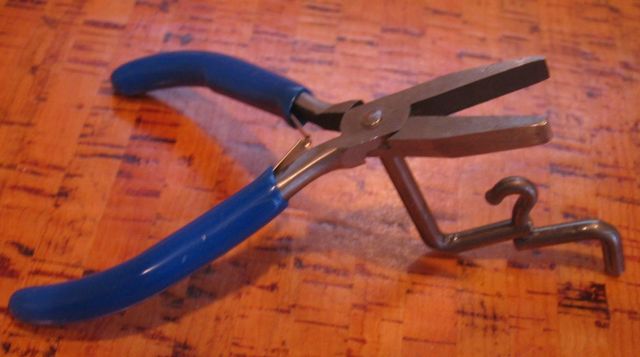
Another esoteric feature is that I have to make my own strings! I feel like those monastic oboe players that spend many hours diligently making their own reeds. Actually it’s not so bad. I have to buy the wire strings in spools and make my own loops at each end of the string using my new "alicate" (string winder). I understand that this is what many guitarists had to do in ye olden days.

I also have to get around to making my own “unhas” or artificial nails to play the guitar with. Thanks to the unusually thorough youtube videos of Ron Fernandez I think I’m going to be able to do this project with my dremel tool, some empty pill bottles and surgical tape. It all just gets more and more strange.
Oh…and for musicians only – Look at how this thing is tuned! Lord help me.

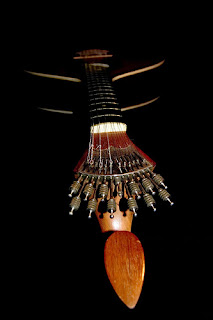
One aesthetic detail of the Portuguese guitar that I'm absolutely enamored with are the "Preston tuners" that grace the head of the instrument like a proud peacock. This design was invented by London guitar maker, John Preston (1753 - 1700). These are also know as "watch key" tuners.
My Portuguese guitar, made by my friend Dave Bucher, is supposed to be completed in mid August so I’ll let you know how things progress. I really hope this helps everyone grasp this strange and beautiful instrument because I'm still thoroughly mystified.
I also have to get around to making my own “unhas” or artificial nails to play the guitar with. Thanks to the unusually thorough youtube videos of Ron Fernandez I think I’m going to be able to do this project with my dremel tool, some empty pill bottles and surgical tape. It all just gets more and more strange.
Oh…and for musicians only – Look at how this thing is tuned! Lord help me.
One aesthetic detail of the Portuguese guitar that I'm absolutely enamored with are the "Preston tuners" that grace the head of the instrument like a proud peacock. This design was invented by London guitar maker, John Preston (1753 - 1700). These are also know as "watch key" tuners.

My Portuguese guitar, made by my friend Dave Bucher, is supposed to be completed in mid August so I’ll let you know how things progress. I really hope this helps everyone grasp this strange and beautiful instrument because I'm still thoroughly mystified.
- Beau
Subscribe to:
Posts (Atom)